


If you are a Pakistani graduate with a few years of work experience, the DAAD EPOS programme is one of the most practical routes to a funded master’s degree in Germany. It is also one of the most misunderstood. There is no single EPOS deadline, no single application form, and the rules differ from the general DAAD study scholarships. This guide explains how EPOS actually works for the 2027–28 intake so you can plan around it.
What is the DAAD EPOS scholarship?
EPOS stands for Development-Related Postgraduate Courses. It is a DAAD programme that funds professionals from developing countries, including Pakistan, to study selected master’s courses (and a few doctoral courses) at German universities. The subjects are development-oriented: engineering, economics, public health, environment, governance and similar fields.
The key point is that EPOS is tied to specific courses. You do not apply to “EPOS” in general. You apply directly to a participating course, and that course runs its own selection.

Who can apply? EPOS eligibility for Pakistani students
Requirements are set in the official DAAD call and on each course page, so always check both. In general, the current call asks for the following:
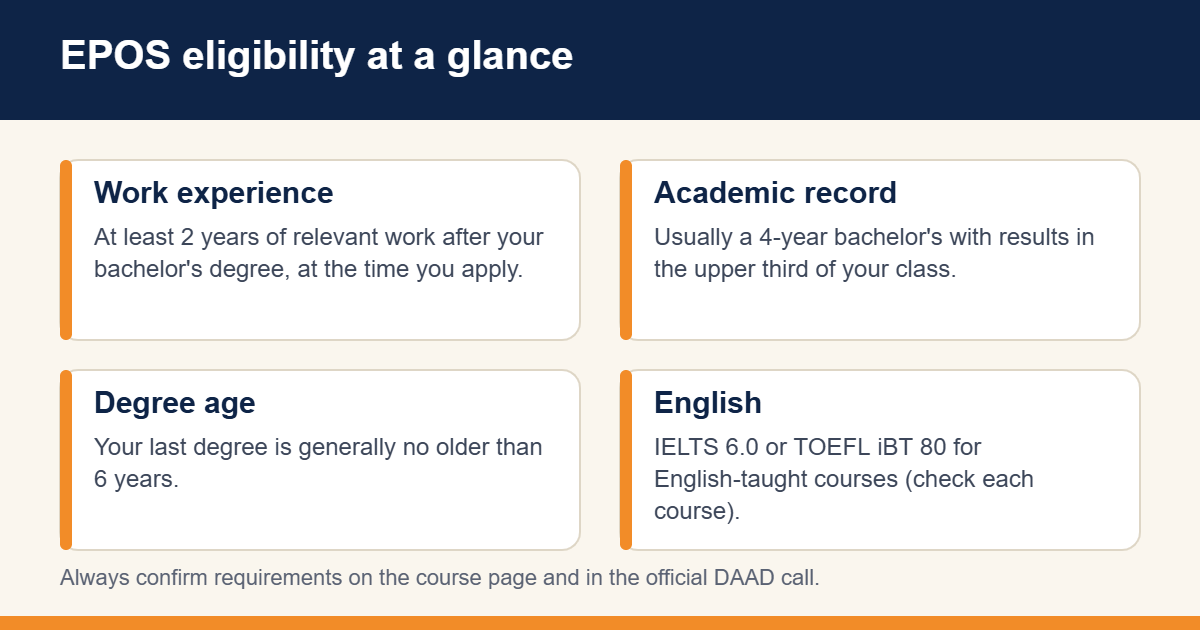
- Work experience: at least two years of relevant professional experience after your bachelor’s degree, by the time you apply. Fresh graduates should not plan on EPOS.
- Academic record: usually a four-year bachelor’s degree with results in the upper third of your class.
- Degree age: your last degree is generally no more than six years old.
- Language: for English-taught courses, typically IELTS 6.0 or TOEFL iBT 80. German-taught courses have separate German requirements.
- Citizenship: you must come from an eligible developing country. DAAD Pakistan lists EPOS among the master’s programmes open to Pakistani applicants.
What does EPOS pay?
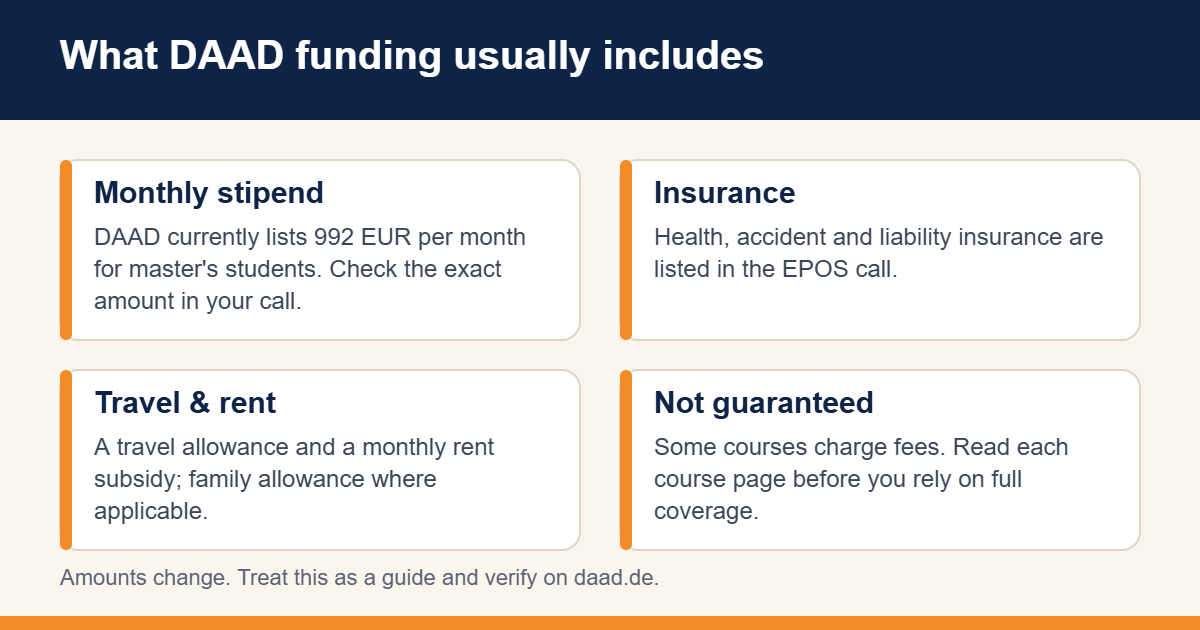
DAAD currently lists a monthly rate of 992 euros for master’s students. The EPOS call also lists health, accident and liability insurance, a travel allowance, a monthly rent subsidy and a family allowance where applicable. One caution: some call texts still show an older monthly figure, so use the amount written in the call you are applying under.
Also check the course page for fees. Public universities in Germany charge little or no tuition, but individual courses can have costs that are not always covered. “Fully funded” should always be confirmed course by course.
EPOS deadlines for the 2027–28 intake
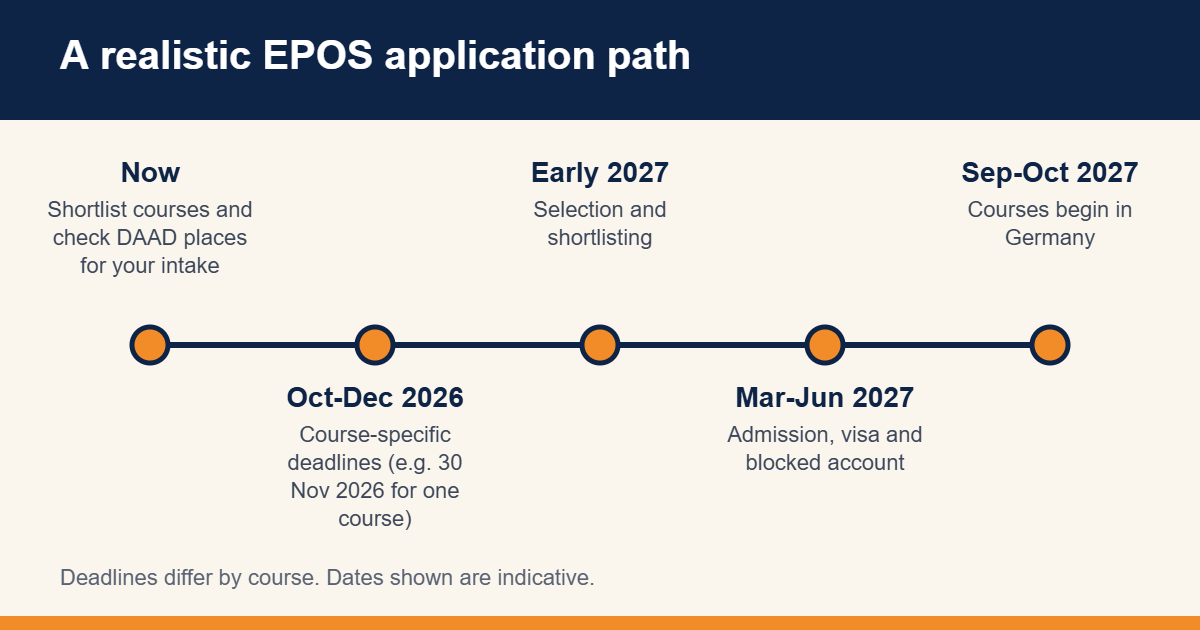
This is where many Pakistani applicants go wrong. Generic scholarship websites quote one date, but EPOS does not work that way. DAAD’s official 2027–28 course list points to each course website for deadlines. As one example, TU Darmstadt’s TropHEE course lists 30 November 2026. Many courses cluster in the autumn months, but you must verify each one.
Two related points are worth knowing:
- The DAAD Helmut-Schmidt-Programme (public policy and governance) closed on 31 July 2026 for the 2027/28 intake. If you were aiming for it, the next window is expected around mid-2027.
- DAAD has announced cuts to several programmes. EPOS is not on the discontinued list, but individual courses can pause DAAD places for a given intake. For example, one Berlin course has said it will not process DAAD applications for its April 2027 start. Confirm that your chosen course still offers DAAD places.

How to apply, step by step
- Check your profile. Count your post-bachelor’s work experience, confirm your degree date, and note your class ranking or grade.
- Shortlist courses. Read the official DAAD EPOS 2027–28 course list and open each course website. You can usually apply to up to three courses and rank them.
- Note each deadline and document list. They differ from course to course.
- Prepare your documents. Typical items are the DAAD application form and checklist, a Europass CV, one motivation letter, employer certificates (ideally with a re-employment assurance), a language certificate and certified degree documents. Start HEC attestation early because it takes time.
- Write a specific motivation letter. Explain what you will study, how it connects to your work in Pakistan, and what you will do after returning. Our guide to writing a winning SOP covers the structure.
- Apply directly to the course before its deadline, then keep your email active for shortlisting.
- Plan for Germany. After selection, you will need admission, a visa appointment and proof of funds. Our guide to studying in Germany walks through those steps.

Common mistakes to avoid
- Using one “DAAD deadline” from an aggregator site instead of the course’s own date.
- Applying as a fresh graduate when EPOS needs two years of work experience.
- Submitting a generic motivation letter that does not connect the course to your career.
- Assuming every course still has DAAD places for your intake.
- Leaving degree attestation and employer letters until the last week.
Is EPOS right for you?
EPOS suits working professionals who want a development-focused master’s in Germany and plan to return to a role in Pakistan. If you do not yet have two years of experience, other routes may fit better. Compare options in our guide to fully funded master’s scholarships by country.
Next Steps
If you are considering EPOS, the most useful first step is a quick profile check: do your work experience, degree date and course choice line up with the call? Hum Scholars helps students shortlist courses, plan document timelines and review motivation letters. You can reach us through the contact page or at humscholars.info@gmail.com.
Details such as deadlines and monthly amounts change between calls. Please confirm everything on the official DAAD website and the course page before you apply.