

Japan’s MEXT scholarship is one of the few programmes that waives tuition, pays a monthly allowance and covers your flights, yet it gets far less attention among Pakistani students than UK or German options. The catch is timing. The embassy window is short and opens only once a year. If you are reading this in late 2026, the 2027 embassy round has already closed, which means the smart move is to prepare now for the next one. Here is how the scholarship works and how to get ready.
What is the MEXT scholarship?
MEXT, also called the Japanese Government (Monbukagakusho) Scholarship, is funded by Japan’s Ministry of Education. It supports international students at Japanese universities at undergraduate, master’s and doctoral level. For graduate applicants, the main category is “Research Student”, which can lead to a master’s or doctoral degree.
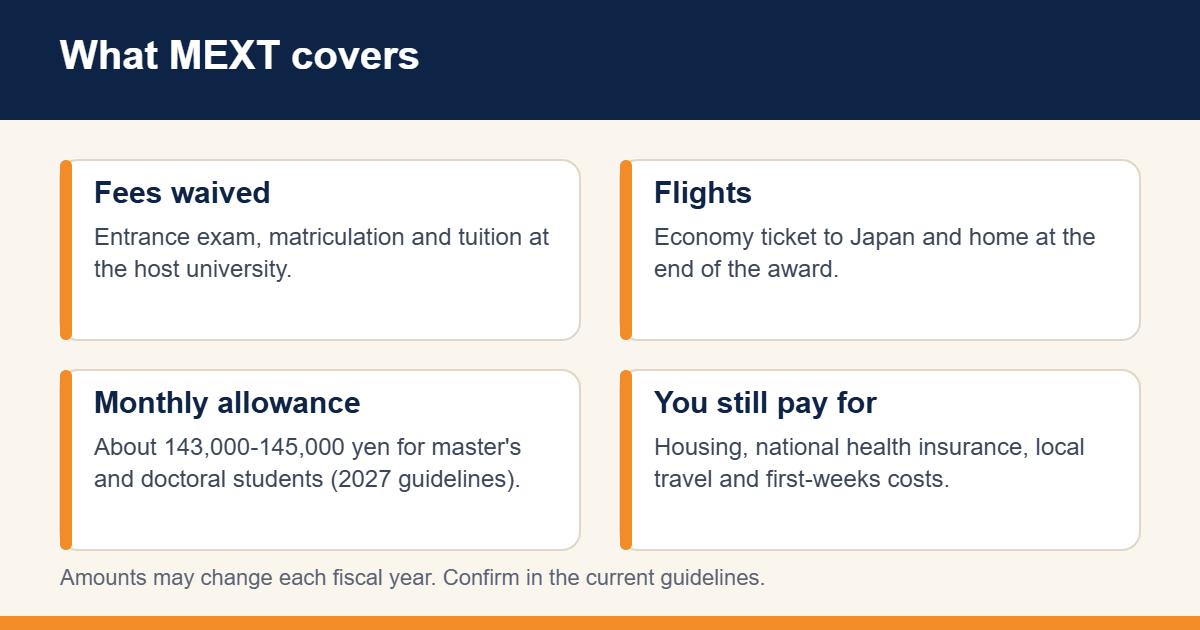
What does MEXT cover?
Under the 2027 guidelines, MEXT covers university fees (entrance exam, matriculation and tuition), an economy-class flight to Japan and back, and a monthly allowance. For master’s and doctoral students the allowance is around 143,000 to 145,000 yen per month, with a small supplement in some regions. Amounts can change each fiscal year, so check the current guidelines.
You still pay for housing, national health insurance, travel to your home airport and your first weeks in Japan, since the first allowance arrives roughly a month after you land. Plan a cash buffer.
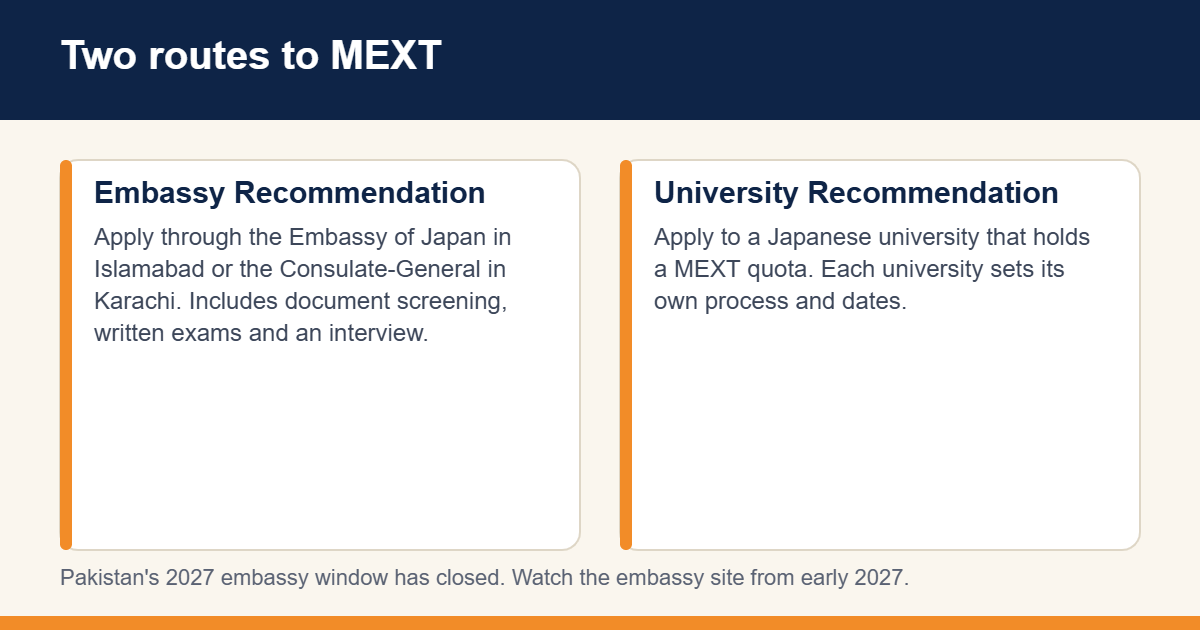
Two routes: Embassy vs University Recommendation
Embassy Recommendation. You apply through the Embassy of Japan in Islamabad or the Consulate-General in Karachi. The process includes document screening, written exams (Japanese and English for research applicants) and an interview. Passing the first screening does not guarantee an award. MEXT runs a second screening and final placement.
University Recommendation. You apply to a Japanese university that holds a MEXT quota. Each university sets its own process and dates, often between autumn and early the following year. These quotas depend on a current call for your category and intake, and some universities have changed or paused their general recruitment, so verify before investing time.
The two routes run on separate calendars. Missing the embassy window does not stop you from checking university routes.
Where does the 2027 round stand for Pakistan?
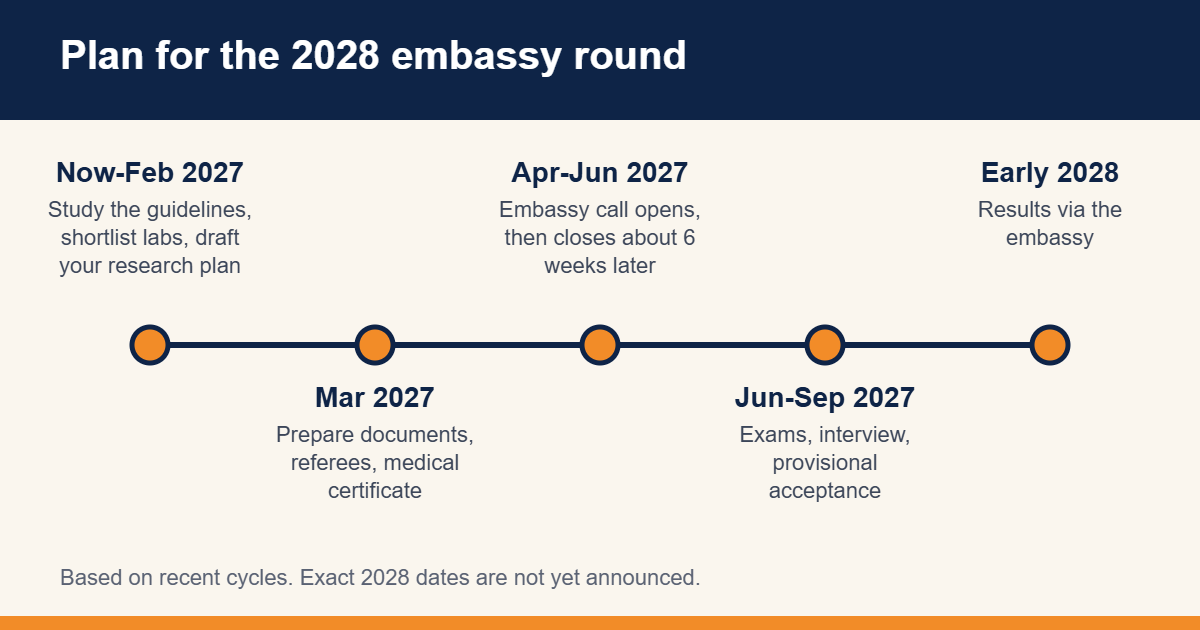
The 2027 embassy round has closed. Reported Pakistan deadlines for the 2027 intake were 26 May 2026 for research applicants and 5 June 2026 for undergraduates, and the embassy has contacted shortlisted candidates. The 2028 call has not been announced yet. Based on recent cycles, expect it to open in spring 2027 with a window of roughly six weeks. Confirm on the Embassy of Japan in Pakistan website.
Who can apply?
Eligibility is set each year in the MEXT guidelines. For the 2027 round, research applicants had to be born on or after 2 April 1992 and hold a bachelor’s degree (or an equivalent of at least 16 years of education). The cut-off date moves forward each cycle, so check the new guidelines. MEXT does not set a minimum IELTS or TOEFL score, and you do not need Japanese before applying, though you must be willing to learn it.
Applicants who are already enrolled or planning to enrol in Japan as self-funded students, previous MEXT grantees (with limited exceptions) and military personnel are ineligible.
How research-student selection works
- Apply at the embassy. Submit the application form, placement preference form, Field of Study and Research Plan, transcripts, degree certificate, a recommendation letter and the MEXT medical certificate.
- First screening. Documents, written tests and an interview.
- Provisional acceptance. Successful candidates request a provisional acceptance letter from a Japanese university. This step carries real weight, so contact the university’s international office rather than cold-emailing professors only.
- Second screening by MEXT and final placement, with results through the embassy in early the following year.
How to prepare now for the 2028 round
- Read the latest guidelines from Study in Japan (JASSO) and the embassy, then compare with the 2027 documents.
- Shortlist labs and universities that genuinely work on your topic. Your Field of Study and Research Plan should explain why Japan and which labs.
- Write a specific research plan: what you have done, the question you want to answer, your methods, and how you will use the result after returning.
- Prepare documents early. Request full transcripts showing the grading scale, arrange your recommendation letter and book your medical certificate. Use only the current year’s forms, and write your name exactly as in your passport.
- Start basic Japanese. Everyone takes the Japanese test. A low score usually leads to language preparation rather than automatic rejection, but familiarity helps.
- Keep a backup. Apply to other funded options in parallel. Our guides to scholarships in South Korea and fully funded master’s scholarships by country are a good place to start.
Common mistakes
- Waiting for the embassy announcement before starting to prepare.
- Using last year’s forms or an outdated age cut-off.
- Submitting a vague research plan that does not name labs or methods.
- Applying through the wrong channel, or submitting incomplete documents. Only complete applications are considered.
- Applying to two MEXT programmes at the same time, which is not allowed.
Next Steps
If Japan is on your list, the best use of the next few months is to build a strong research plan and shortlist labs before the 2028 call opens. Hum Scholars can review your profile, help you structure a research plan and map a document timeline. Reach us through the contact page or at humscholars.info@gmail.com.
Dates, ages and allowance amounts change each year. Please confirm everything with the Embassy of Japan in Pakistan and the official MEXT guidelines before applying.
Photo credits: Yasuda Auditorium (featured image) by Kakidai, CC BY-SA 4.0; other campus photos as credited under each image, via Wikimedia Commons.